


Pink Crepe Myrtle
This plant ships:
November 2025We sell bare root plants - click here to see what you'll receive
Overview
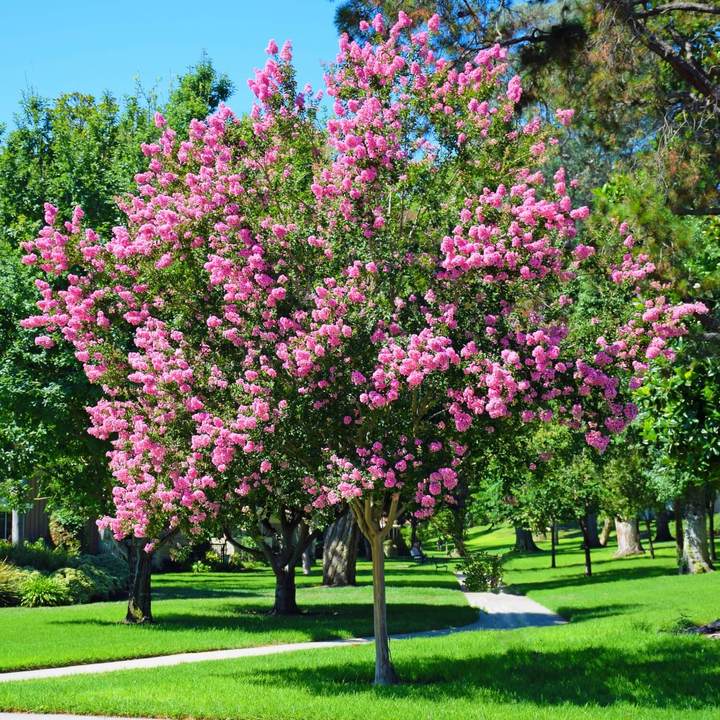
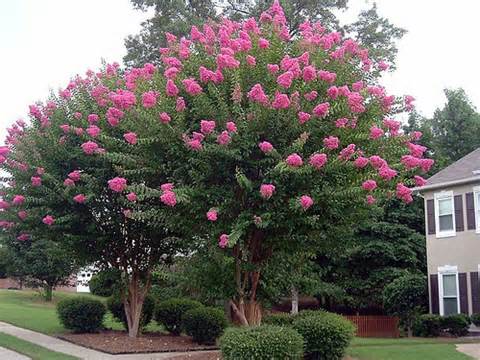
The Sioux Pink Crepe Myrtle earns its keep in the landscape twice a year: first with a long summer show of ruffled red blooms that cover the crown from June into September, then again in fall when the foliage turns shades of orange and burgundy before dropping. It's a workhorse ornamental tree, prized for the kind of season-long color that few other landscape trees can match, and it asks for very little in return.
Care & Growing Tips
This crepe myrtle is hardy across a wide range, thriving in zones 4 through 9, which covers everything from the upper Midwest down through the Deep South. That range makes it a genuinely flexible choice — gardeners in cooler climates aren't shut out of the crepe myrtle world the way they are with some of the more tender southern varieties. Give it a spot in full sun, and it rewards you with dense clusters of red flowers held on new wood, meaning even a hard winter pruning won't cost you a season of bloom.
More About This Plant
Where It Fits in the Garden
Bloom Season & Appearance
Detail 1
Sioux Pink Crepe Myrtle is built for landscaping and flower garden use, and it earns a spot in either setting for different reasons. As a landscape specimen, it works as a single focal point near a patio, an anchor at the corner of a house, or planted in a row along a driveway for a repeating rhythm of color. In a flower garden, it pairs well as a backdrop tree behind lower perennials and shrubs, giving the bed height and structure without overwhelming what's planted in front of it. Its naturally attractive form and mottled, peeling bark keep it interesting even in winter, once the leaves and blooms are gone — a detail a lot of flowering trees can't claim.
Detail 2
If you're weighing crepe myrtle varieties against each other for a landscaping project, our post on how to landscape with Muskogee crepe myrtle covers layout and spacing principles that apply just as well here, and our roundup of crepe myrtles and the range of color they bring to a garden is worth a read if you're deciding how this red-blooming variety will sit alongside other plantings.
Additional Details
Care and Placement Notes
Care & Growing Tips (cont.)
Crepe myrtles as a group are known for being low-fuss once established, tolerating heat, humidity, and periods of drought better than most flowering trees. Good air circulation around the canopy and a sunny location go a long way toward keeping the foliage clean and the bloom count high. Because it flowers on new growth, late winter is the right time for any structural pruning, letting the tree put its energy into the coming season's flowers rather than repairing cuts made mid-summer.
Bloom Season & Appearance (cont.)
For gardeners drawn to pink and red-toned blooms generally, our piece on the beauty of native pink flowers is a good companion read for building out a color-coordinated bed. And if you're shopping around before committing, browsing our best-selling plants collection will show you how this crepe myrtle stacks up against other proven performers in the nursery.