


Sensitive Fern
This plant ships:
7-10 DaysWe sell bare root plants - click here to see what you'll receive
Overview
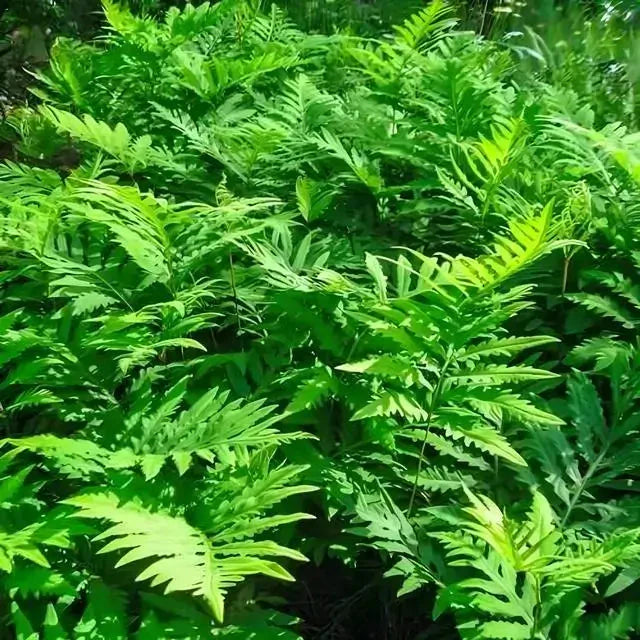
The sensitive fern (Onoclea sensibilis) earns its name from an old-fashioned trait: its bright green, deeply lobed fronds collapse at the first hint of frost, long before most other perennials show signs of the season changing. That quick reaction to cold made it a useful "weather signal" for early gardeners, but the real draw today is how effortlessly this native fern fills in shady, damp corners of the landscape where little else thrives. It spreads by creeping rhizomes to form a loose, textured groundcover, and its coarse-cut foliage brings a different look than the finer, lacy ferns most people picture.
Bloom Season & Appearance
Beyond the summer foliage, sensitive fern produces upright, dark brown fertile fronds covered in bead-like clusters that persist through winter, giving the plant real four-season interest even after the green fronds die back. Those winter stalks are often left standing in naturalized areas and rain gardens for texture and for the seed heads they offer to overwintering birds.
More About This Plant
Where It Fits in the Garden
Care & Growing Tips
Sensitive fern is built for shade gardens and naturalized landscaping, particularly in spots with consistently moist soil — pond edges, low spots, woodland margins, or the damp shade along a fence line. It's hardy across zones 3 through 9, which covers a wide swath of the country from cold northern winters down into warmer, humid climates, and it tolerates both shade and light dappled sun as long as moisture stays consistent. Because it spreads readily once established, it works well as a large-scale groundcover or filler between shrubs rather than a tidy specimen plant for a small bed. If you're working with a shaded, moisture-retentive area and want something that colonizes without constant babysitting, our native fern plants make excellent border plants for exactly this kind of application.
Planting Zone & Climate
Gardeners in colder regions often ask which ferns can actually handle a hard winter, and sensitive fern is one of the more reliable answers — for a broader look at cold-hardy options for zones like these, our guide to hardy fern plants for cold climates covers how it compares to other tough species.
Additional Details
Planting and Care
Care & Growing Tips (cont.)
Plant sensitive fern in humus-rich, moisture-retentive soil in part to full shade. It's not fussy about soil pH and adapts to clay or heavier soils better than many ferns, which is part of why it shows up naturally along stream banks and in wet woodlands. Once roots are established, it needs little more than a layer of mulch to retain moisture and an occasional deep watering during dry spells — it isn't a plant that demands frequent fertilizing or pruning, though cutting back the fronds after they collapse in fall keeps beds looking tidy through winter. Its spreading habit means it pairs best with other vigorous shade perennials rather than delicate specimens that might get crowded out over a few seasons.
Additional Details
For gardeners assembling a shade bed from scratch, sensitive fern is a good low-maintenance anchor plant, and browsing our full easy ferns to grow collection is a straightforward way to round out the planting with companions that share similar light and moisture needs.