

Flowering Dogwood Trees
This plant ships:
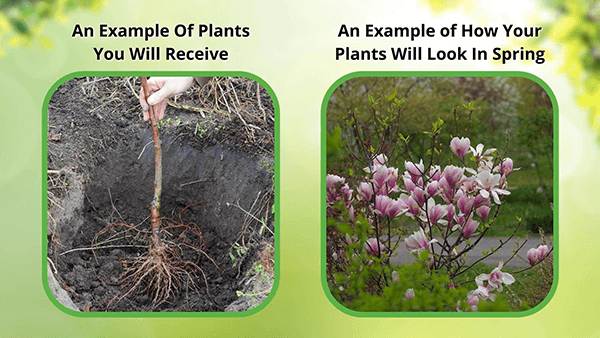
Ships Spring 2026We sell bare root plants - click here to see what you'll receive
Overview
A Native Classic for Shade and Woodland Gardens
Bloom Season & Appearance
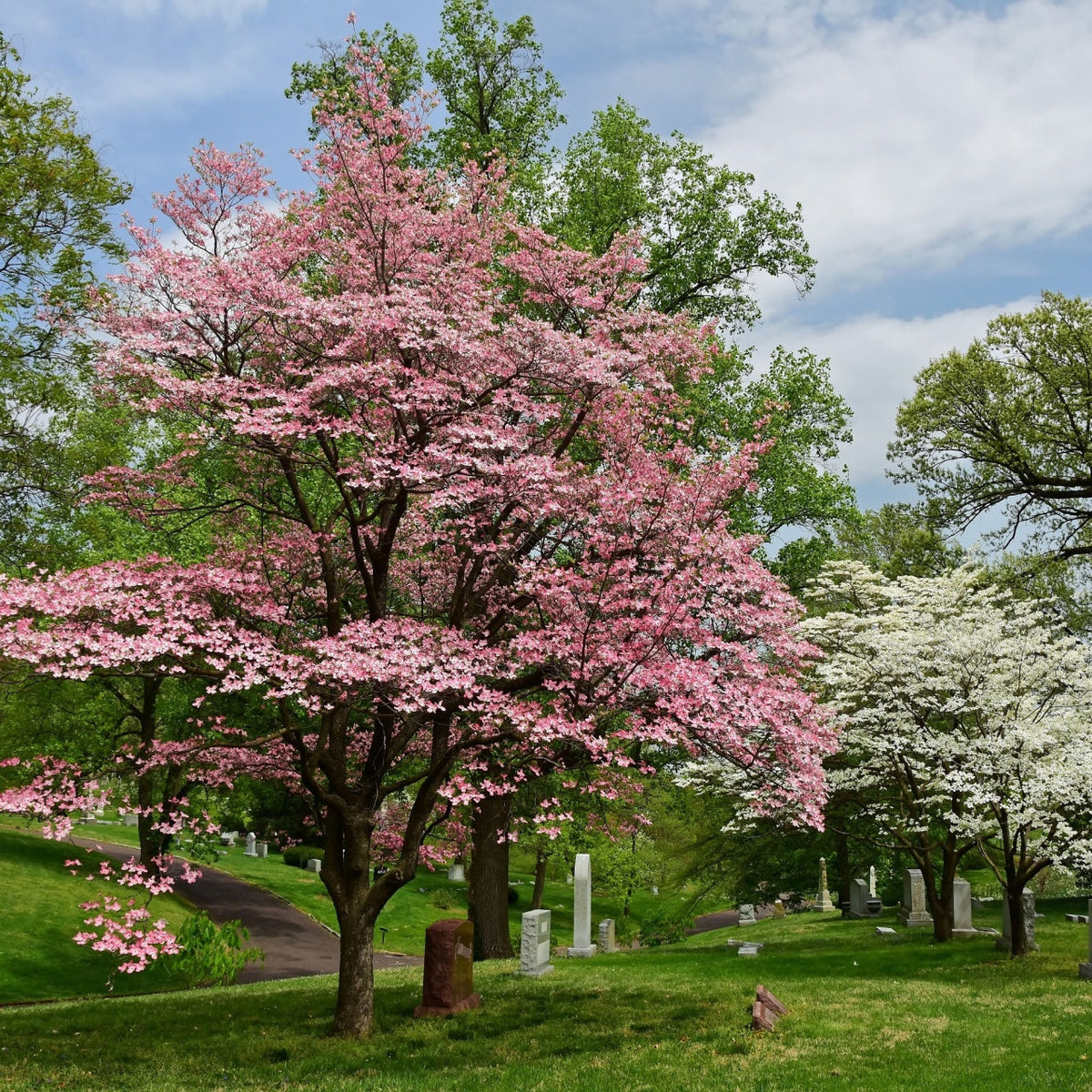
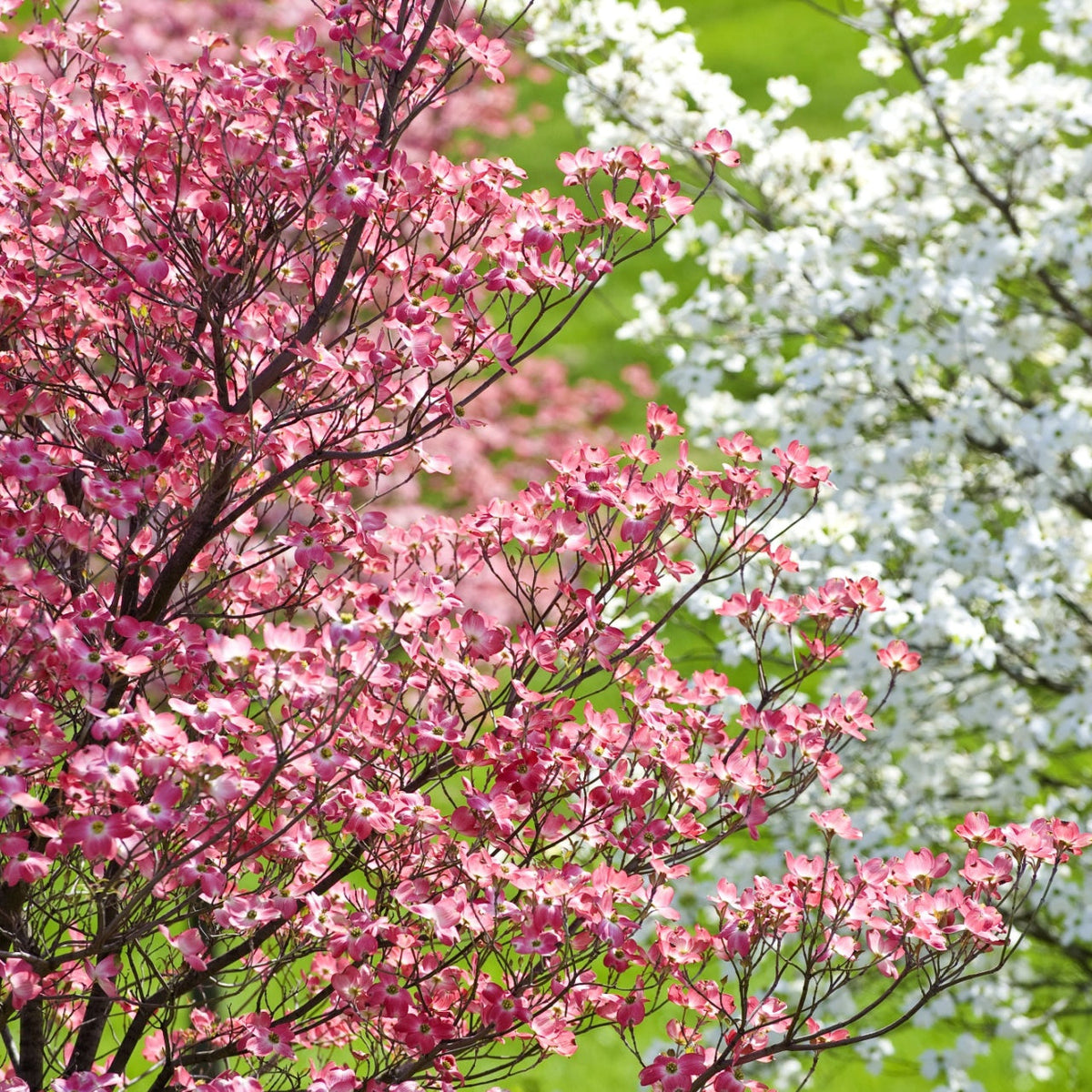
Few trees announce spring the way a Flowering Dogwood does. Before the leaves fully unfurl, the branches fill with wide, four-petaled bracts in white or soft pink, giving the whole canopy a layered, horizontal look that's instantly recognizable in yards, woodland edges, and neighborhood streets across the eastern and southern United States. This is the dogwood your grandparents probably had growing along the property line, and it's still one of the most requested ornamental trees we sell for good reason: it's a genuinely four-season tree, with spring blooms, red summer berries that birds fight over, wine-red fall foliage, and a distinctive tiered branching pattern that reads as sculpture once the leaves drop.
Care & Growing Tips
Flowering Dogwood is happiest planted in USDA zones 5 to 9, which covers most of the country outside the deep desert Southwest and the far northern tier. It's naturally an understory tree, so it does best with some canopy cover overhead or at least afternoon shade rather than blasting all-day sun. That makes it a natural fit for shade gardens and the dappled light under larger oaks, maples, or pines, where it fills in the mid-level layer that a lot of yards are missing.
More About This Plant
Where to Plant It
Care & Growing Tips (cont.)
Detail 1
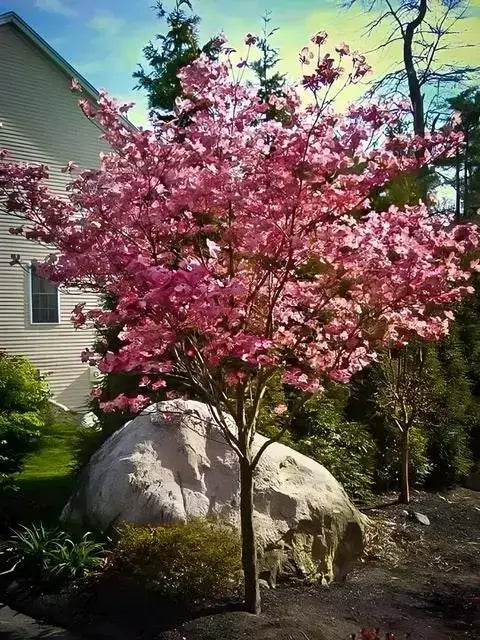
Give your dogwood a spot with moist, well-drained soil and a little organic matter worked in at planting time. Full sun in a hot southern zone can scorch the leaves and stress the tree over time, so if you're in zone 8 or 9, lean toward a location with morning sun and afternoon shade. Gardeners further north in zone 5 or 6 can get away with more direct light, especially in spring and fall when temperatures stay milder. Because it's a manageable, mid-size tree rather than a towering shade giant, it works well planted near a patio, along a fence line, or as an anchor specimen at the corner of a house where a full-size oak would eventually be too much.
Detail 2
If you're planning a layered shade garden around it, dogwoods pair beautifully with woodland perennials, hostas, ferns, and spring ephemerals planted at their base — we've got some good combination ideas in our post on perennials for planting under trees . The dropped leaves also break down into a nice natural mulch layer that helps retain moisture for whatever you plant beneath it.
Additional Details
Care and What to Expect
Care & Growing Tips (cont.)
Once established, Flowering Dogwood is a relatively low-maintenance tree. Water regularly through the first couple of growing seasons while the root system is developing, then it settles into a steady, moderate growth rate. In late winter, light pruning to remove crossing or dead branches, while the tree is still dormant, is usually all it needs. The red berries that follow the spring bloom aren't just decorative — they're a genuine food source for cardinals, robins, and other backyard birds heading into fall, so if you're trying to bring more wildlife into the yard, this tree does a lot of that work on its own.
Bloom Season & Appearance (cont.)
If you like the idea of a pink-flowering variety instead of the classic white, it's worth reading up on the Cherokee Princess Dogwood, a popular pink cultivar we cover in more detail on the blog. And if you're still deciding what else to add to the landscape around it, browse our full tree collection for companion plantings that'll round out the space through every season.