

Button Bush Live Stakes
This plant ships:
7-10 DaysWe sell bare root plants - click here to see what you'll receive
Overview
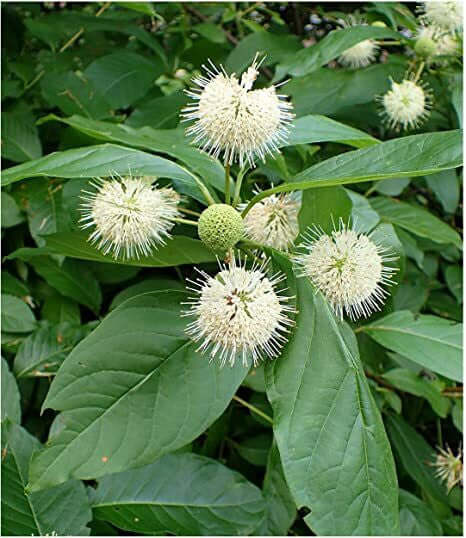
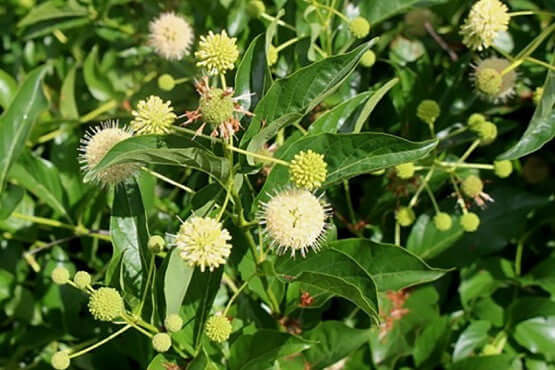
Button Bush live stakes bring one of North America's most distinctive wetland natives to your landscape, prized for the pincushion-like white flower spheres that give the plant its common name. If you've got a soggy corner of the yard, a pond edge, or a rain garden that never quite works with other shrubs, this is the plant that thrives where most others struggle. Sold as dormant live stakes, these are cut sections of the shrub ready to root directly in moist soil, making them one of the most economical ways to establish a stand of button bush quickly.
More About This Plant
What Makes Button Bush Worth Planting
Care & Growing Tips
Detail 1
The signature white blooms are the main draw, appearing as round, spiky clusters that look almost otherworldly compared to typical shrub flowers. They act as a magnet for bees, butterflies, and hummingbirds, and the seed heads that follow feed songbirds and waterfowl through the colder months. Button bush is native to wet meadows, streambanks, and pond margins across a huge swath of the country, which is exactly why it performs so well in planting zones 5 through 9. It tolerates standing water and heavy clay far better than most ornamental shrubs , and it's just as happy in consistently moist garden soil that isn't technically a wetland.
Detail 2
Because live stakes root so readily in wet ground, button bush is a go-to choice for stabilizing streambanks, pond edges, and other erosion-prone areas where the root system needs to knit soil together fast. If that's your goal, it's worth reading our guide on native live stakes for erosion control before you plant, since spacing and placement make a real difference in how well the stakes take hold along a slope or bank.
Additional Details
Planting and Care
Care & Growing Tips (cont.)
Detail 1
Live stakes should go into the ground while dormant, pushed firmly into consistently moist or wet soil with at least a couple of buds below the surface. Full to partial sun shade both work, though flowering tends to be heaviest with more direct light. Once established, button bush needs very little intervention beyond keeping the soil from drying out completely during its first season — after that, its root system is well adapted to fluctuating water levels, including periods of standing water that would rot out most other shrubs. It also responds well to occasional pruning if you want to keep it more compact, though left alone it will fill out into a naturally rounded, multi-stemmed form.
Detail 2
Button bush pairs naturally with other moisture-loving natives and works well as part of a broader planting plan for wet areas, buffer strips, or naturalized ponds. If you're building out that kind of planting, browse our full live stakes collection to find companion species suited to the same wet-soil conditions. It's also a strong addition if you're specifically trying to draw in pollinators and songbirds, since the flowers and seed heads offer food at different points in the growing season.
Planting Zone & Climate
Given its wide hardiness range and tolerance for difficult, wet sites, button bush live stakes are a practical pick for anyone dealing with a stubborn low spot in the yard rather than fighting it with plants that were never suited to it in the first place.